Showing posts with label St James. Show all posts

Wednesday, 8 July 2026

Trowbridge

Trowbridge, population 37,000, is the county town of Wiltshire, although it is now the unitary authority of Wiltshire rather than the county council. So it makes sense to start our visit at County Hall in Bythesea Road (which incidentally is nowhere near being “by the sea”).


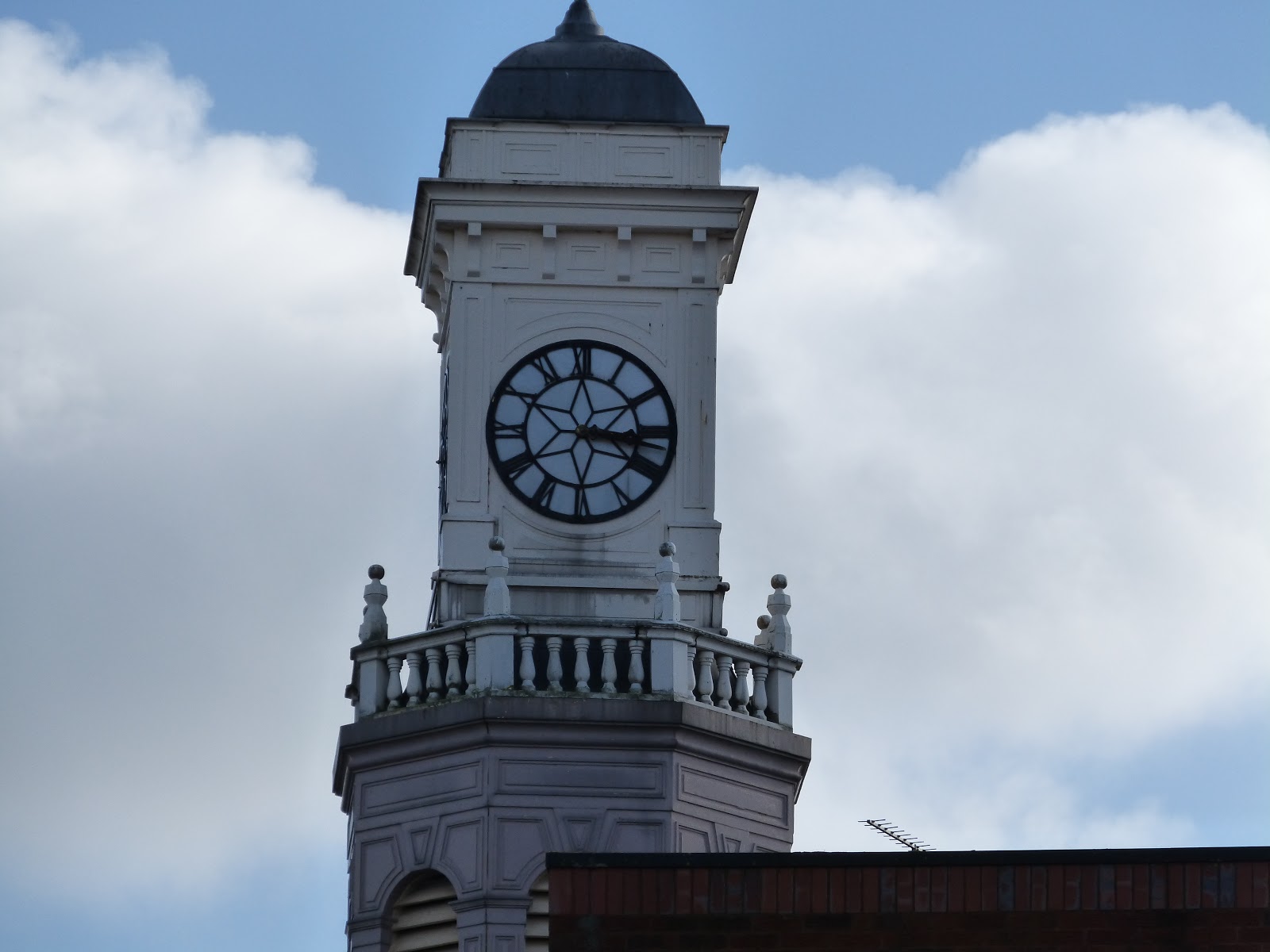
County Hall was designed by the architect Philip Hepworth and was completed in 1940. The clock is housed on a wooden lantern.


Time to go down in scale from County Hall to Town Hall, the latter sitting in the town centre on Market Street.


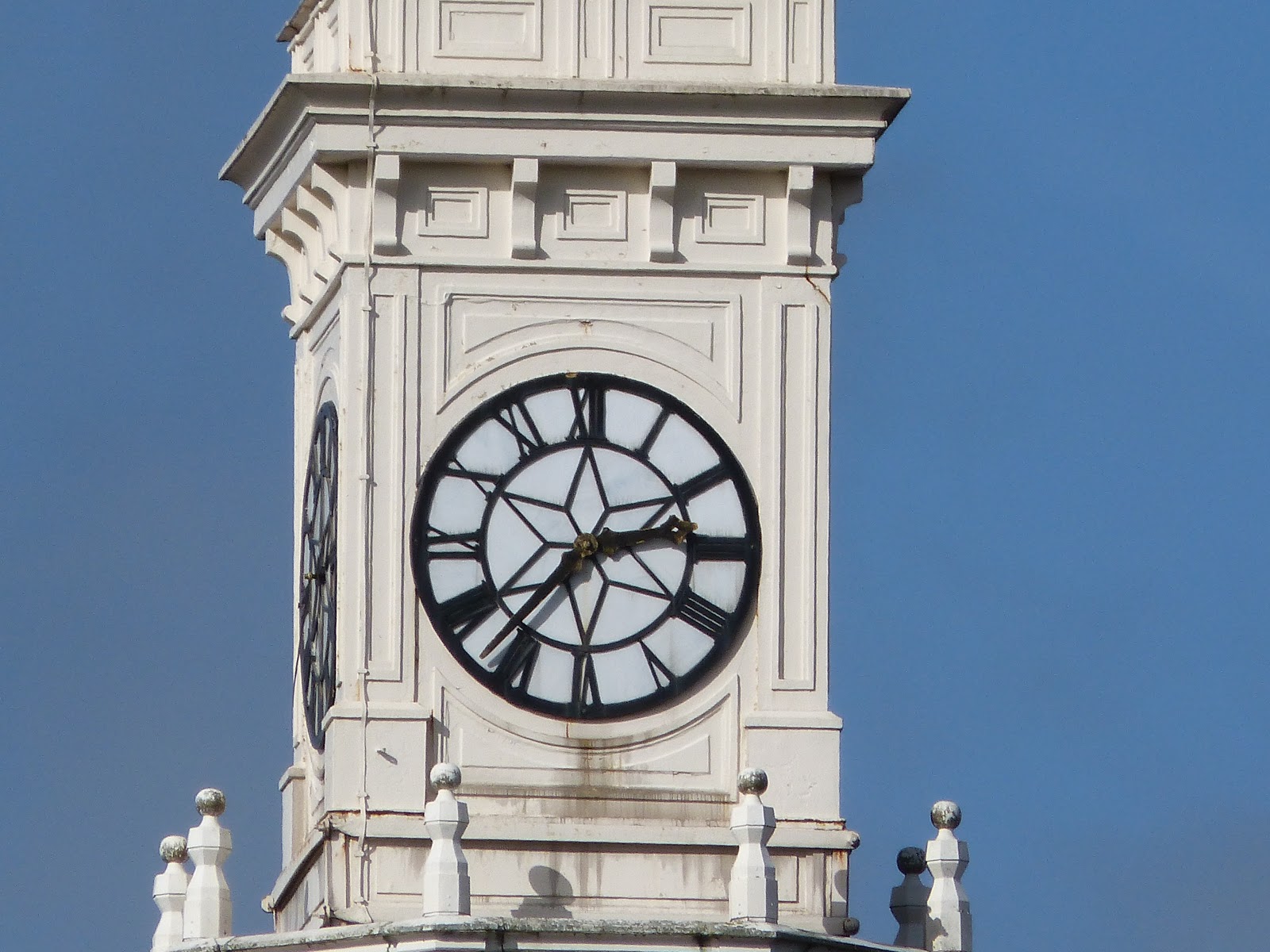
Not knowing anything about Trowbridge before my visit, I was surprised that it was once a major mill town making cloth, known as the Manchester of the West. It therefore makes sense that the Town Hall was funded by a local cloth merchant by the name of Sir William Roger Brown, who offered to pay for the building as a celebration of Queen Victoria’s Golden Jubilee (an event which led to many new clocks appearing across the country, either on buildings such as Trowbridge’s Town hall or on stand-alone clock towers).


The building was opened on 14 June 1889. The clock is on what is described as an Italianate style tower.


The clock was provided by J.W.Benson Ltd. This company seems to have been a watch rather than a clock maker, so it is not clear whether they manufactured or merely supplied it.


The building is now run by the Trowbridge Town Hall Trust and has a variety of community functions.


 From a pair of municipal buildings we now move to a brace of ecclesiastical ones.

 Holy Trinity is known locally as the Church on the Roundabout as it was encircled by a road “improvement” scheme in the 1970s.


The building is Grade II* listed and was consecrated in 1838.


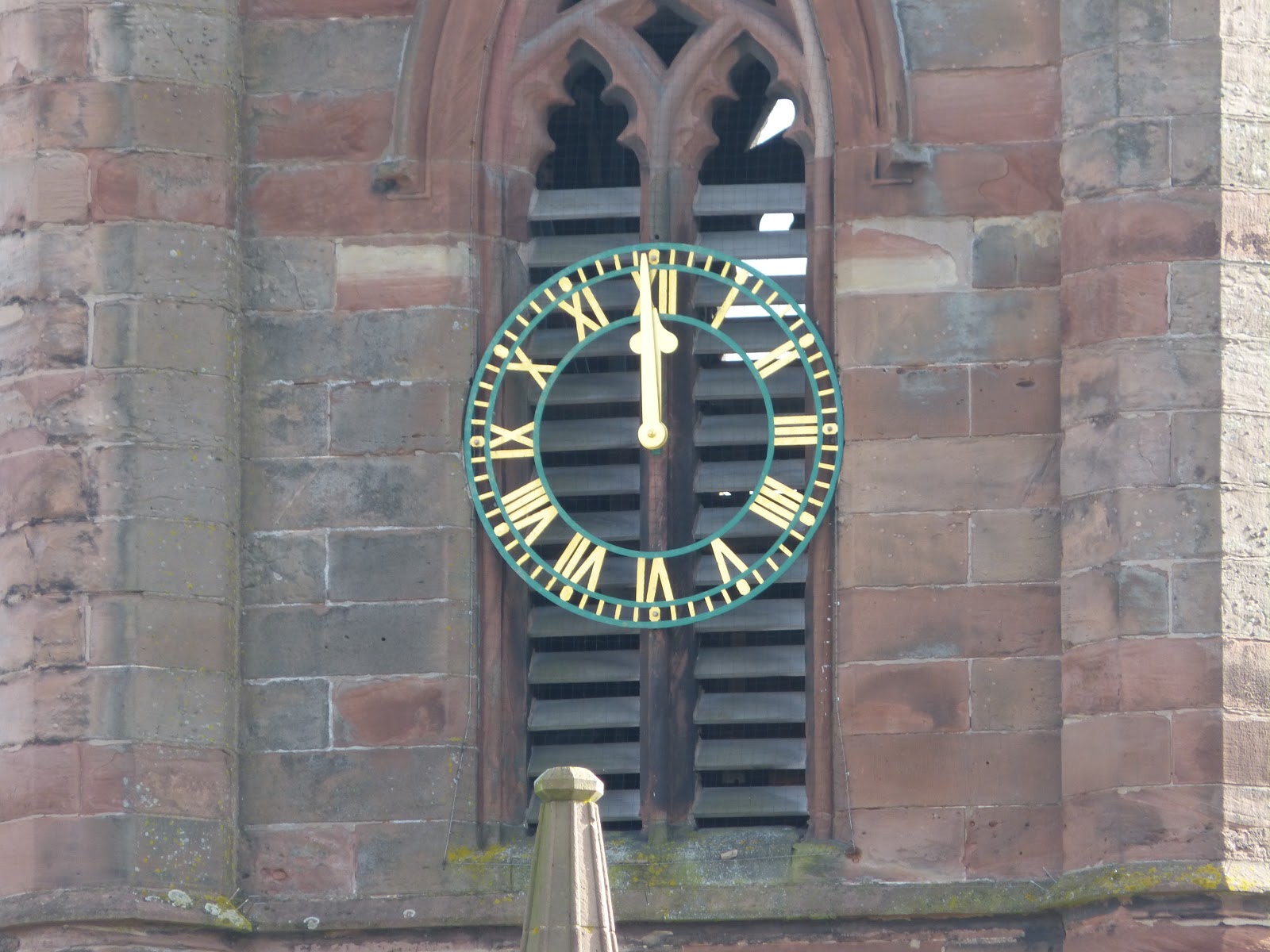
Our second church is St James in the heart of the town.


The original church was built in about 1200, but the current building dates from the 14th century onwards, with major restoration in 1848.


The Grade I listed building has a spire reaching 49 metres, second only in Wiltshire to Salisbury Cathedral.


The local museum has a nice model of the church, including of course the clock.


Two municipal buildings, two churches and finally two retail buildings. First is the Tesco superstore.


Not an exciting building, but the clock face looks good in blue and gold.

And finally we have this clock on Silver Street,


Monday, 18 March 2019

Warrington

Its been a long time. Over a year in fact. I haven't stop visiting towns and the shutter on my camera has been bust, it is just that I haven't got round to writing up the blog. So, here we go again at last, with the same old format but some new towns and clocks.

I will start with my latest visits, and gradually try and catch up with the backlog.

Hello Warrington. A place which will always remind me of the Smirnoff adverts from the 1970s - wodka from Varrington.

The landmark clock in the town is that of Holy Trinity church.


Holy Trinity dates from 1760. The clock tower can be seen from many parts of the town, but is actually quite difficult to see from close up.


According to "Warrington in 50 Buildings (Janice Hayes (2016) - Amberley Publishing) the tower the tower dates from 1862 and belongs to the town rather than the church. Which makes a lot of sense as I would have guessed that it sat on a town hall rather than a church.


So what else is there in Warrington? No less than one of the ancient wonders of the world - well, The Pyramid to be precise, or the Pyramid Art Centre in Palmyra Square to be even more precise.


This is the new glass entrance which links the former county court and Inland Revenue building with the ex Technical School. Apologies that the clock is hard to see due to the strong sunlight and reflections, but if you look hard enough you will see it.


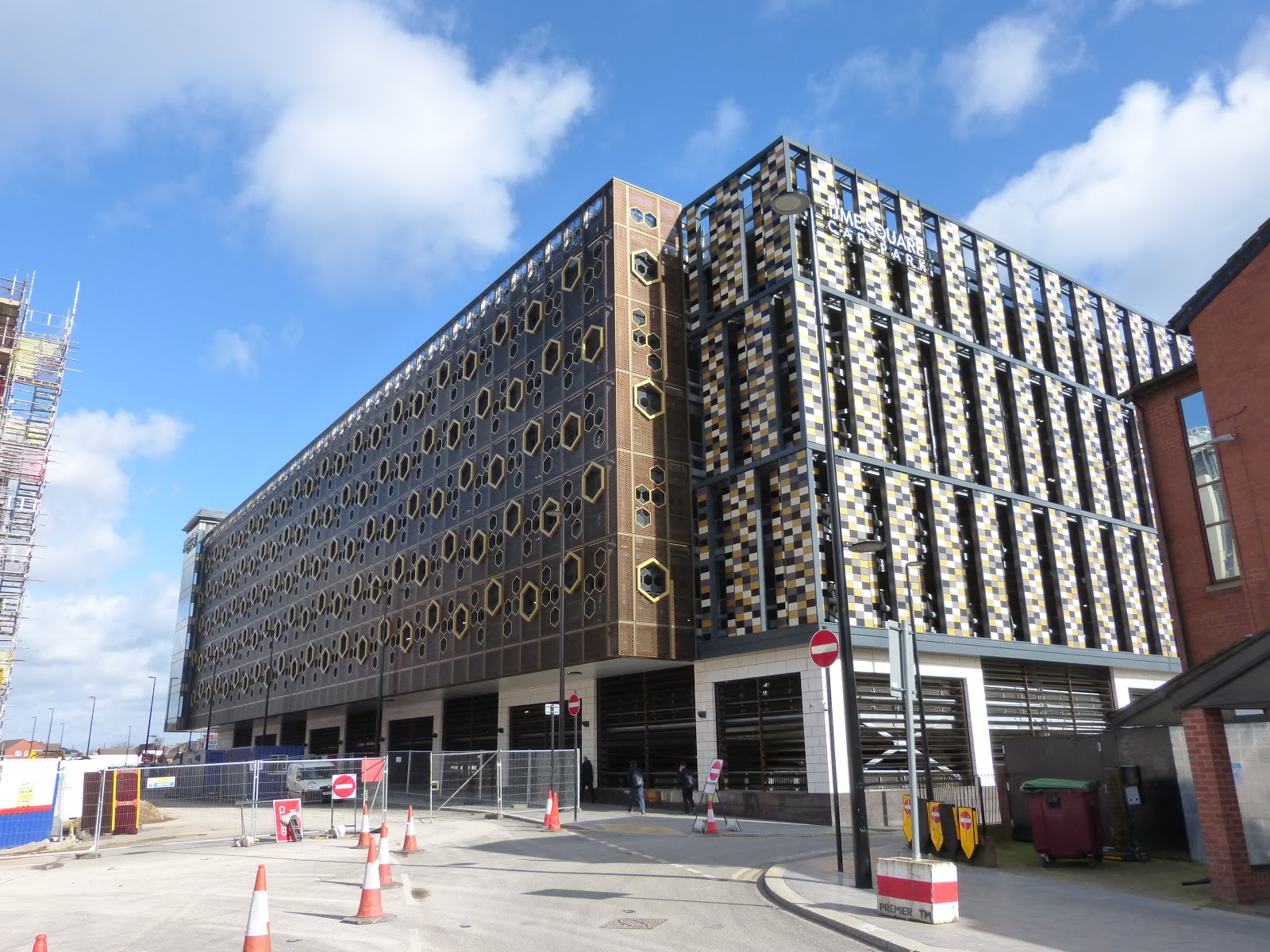
Onwards to Academy Way, which is currently a combination of one massive development site (a new shopping centre?) and a recently completed (and quite magnificent) car park.


I love this clock because of its simplicity of design, using the brick material of the main building, because of its clarity for someone using it as a time piece (or would be if it was working), and because it is not trying to be a pastiche of an old clock design. I am not sure of the longevity of tis building because of all the development around it, but let's hope it stays.


Oh, and the new car park?


Let's have another church. This is St James, to the south of the town centre on Wilderspool Causeway.


The church dates from 1829/30, and, in the words of the British Listed Buildings website (www.britishlistedbuildings.co.uk), is "in the simple Gothic style of the early C19".


What I have now discovered is I should have continued down Wilderspool Causeway to find another clock on Elphins Drive, but that will now have to wait for another day.

Back now to the town centre, and the corner of Bridge Street and Town Hill.


 Currently empty, months of research led me to believe that this was a former bank building. This was confirmed by the large sign!


My final destination was a church that could be seen out to the east of the town. But on the way out along Church Street I had the bonus of this modern clock at the Select Healthcare premises.


And then finally to the church, which is St Elphins, otherwise known as the Warrington Parish Church.


The church dates form the 12th century, and has undergone all the usual alterations and rebuilding of parts over the years that churches of this age endure.


 The church has clock faces on all four sides of the tower.


And now, it is thank you Warrington, and on to the next town.....