Rhyl can be found on the North Wales coast (but probably only if you are looking), which is an area which I have never explored before. The town is a fairly typical seaside resort, which is clearly well past its original heyday but has some some more recent investment to counter the decline. The size of the railway station shows that the town once catered for large influxes of train passengers.
For me, the two most historically interesting facts about the town are that in once had a pier, and it had the world's first passenger hovercraft service. The pier was opened in 1867 and was 718 metres long. Like so many piers it had a troubled history with collisions from ships, fire and storm damage. It was closed in 1966 and demolished in 1973.The hovercraft service operated from the beach and made the 15 mile journey to Wallasey. It was really just a test service to try out the viability of hovercraft services, and only operated from July to September 1962.
And so now onto the clocks.
Our first horological encounter is on leaving the station. The clock stands at the edge of a new bus interchange area immediately outside of the station.


And on the column there is a plaque which states that the clock dates from 1995, with funding sources shown in English and Welsh.


Heading straight for the coast, the way is guided by the town's main clock tower. This stands in a roundabout which forms the junction between High Street, West Parade and East Parade.


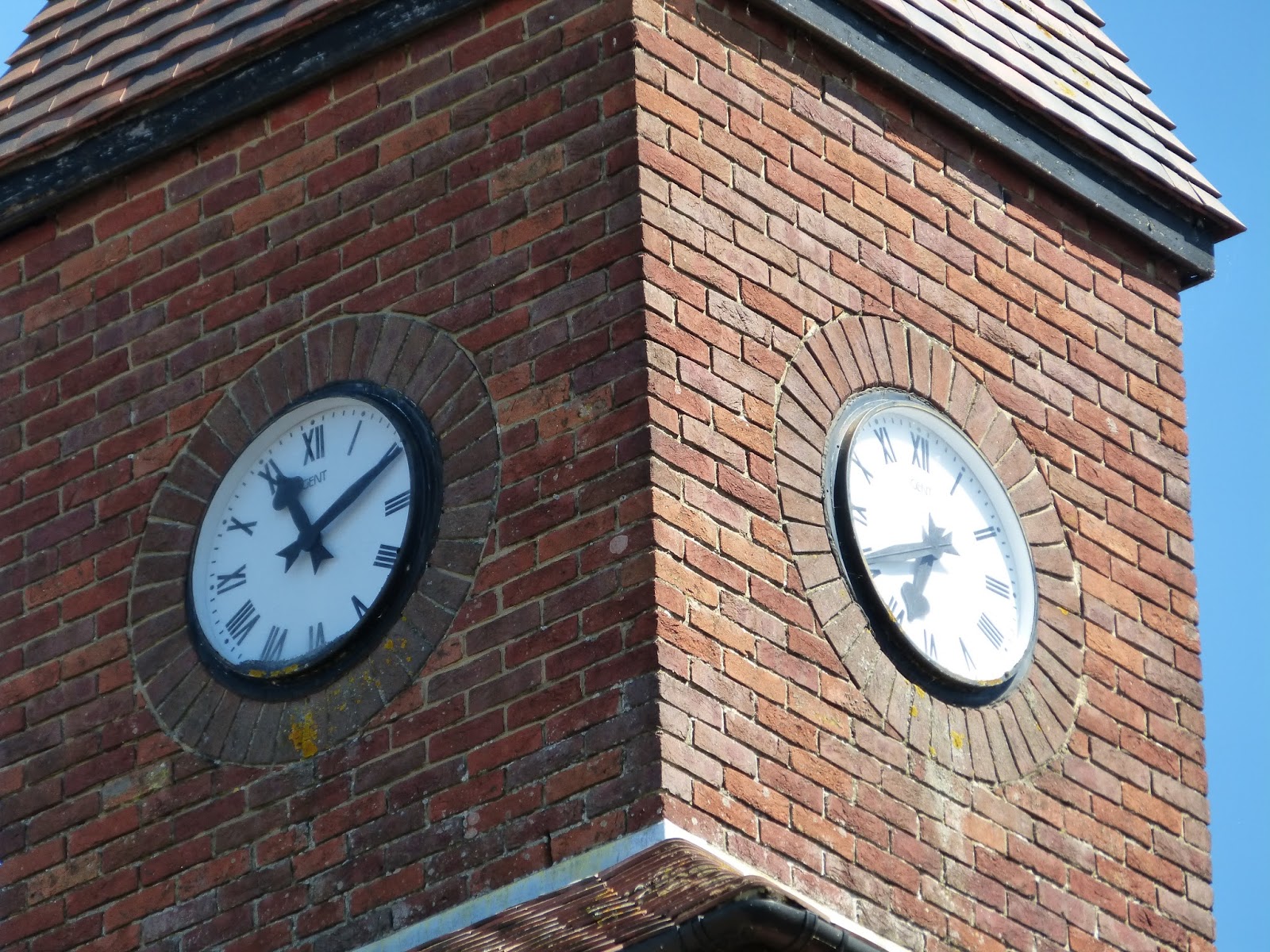
Our fifth and final clock in Rhyl is on the top of this building on the junction of Water Street and Crescent Road.


More North Wales coastal towns to come.